


While the world debates whether AI will create utopia or apocalypse, I've spent the last year documenting something everyone's missing: the organizational technology that could actually keep AI aligned with human values. It's been hiding in plain sight for decades, perfected by organizations we've been trained to see as charities rather than sophisticated collaboration systems.
It's been more than a year since I wrote to this community. In my last post I shared my ambition to write a book and that work is underway. I'm four chapters in, more than 25,000 words written for a non-fiction work I am tentatively calling, The Future is Not For Profit. Having spent 15 years building and scaling nonprofits while simultaneously developing AI tools for the sector, this writing process has crystallized insights I couldn't have articulated 18 months ago.
Writing helps to clarify thinking. Many of the ideas that were fuzzy in my mind have come into sharp focus. Here are some of them:
The AI Reality Check
AI companies cannot create safe AI - Profit incentives make safety impossible when billions are at stake
AI will replace many human roles permanently, not augment them - The "AI as tool" narrative is an unexamined platitude
"AI safety" is mostly corporate theater - Companies racing to deploy while talking about alignment and responsibility
Pattern recognition is the real superintelligence happening now - Forget science fiction consciousness; ubiquitous pattern detection is the immediate force to be reckoned with
Most AI discourse misses the point - Focus on the economic system into which AI is being deployed, not the technology itself
Why Current Solutions Won't Work
The economy is outdated and breaking - AI will expose how fundamentally unsustainable our current “profit above all else” model is
Regulation is necessary, but insufficient - You can't regulate away perverse profit incentives; the system needs reformatting
"Stakeholder capitalism" is a mirage - Legal structures and financial incentives determine corporate behavior, not good intentions
Wealth concentration is making traditional democracy impossible - Soon-to-be trillionaires amassing private state-like powers can't be meaningfully constrained by democratic processes
The real risk isn't robot uprising, it's mass economic displacement - Unemployment and crisis of purpose happens long before AGI
The Immediate Alternative
Local communities must act immediately - The speed of 8 billion people acting simultaneously, independently in self-interest is the only solution fast enough to keep pace with exponential AI development
Democratic institutions can adapt - But we must use existing systems to redirect AI-generated value to human-led organizations
Waiting for government or corporate solutions is too slow - By the time they act (if ever), it's too late
The Nonprofit Revolution
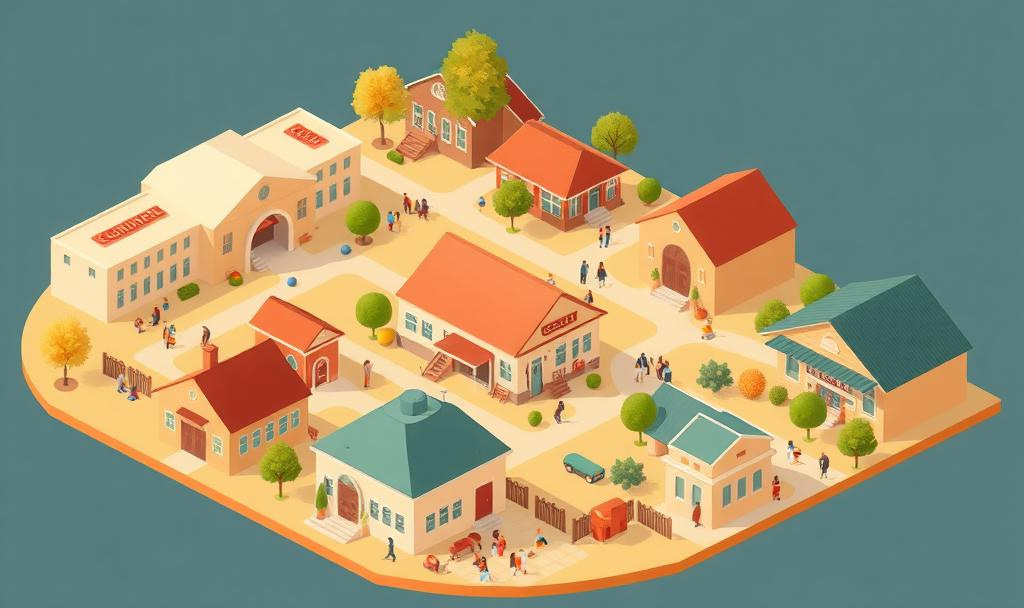
Nonprofits are not organizations, they are technology - Sophisticated coordination systems evolved for unprofitable environments
Nonprofits are humanity's secret weapon - They've spent centuries perfecting coordination of complex human activity without profit motivation, exactly what we'll need when AI eliminates traditional jobs
Nonprofits evolved to solve the purpose crisis AI will create - They've mastered purpose-driven economics where financial rewards are scarce but meaningful impact is abundant
Why We Must Act Now
Policy solutions won't emerge from the status quo - Barring a major catastrophe that forces immediate action
We're the last generation that can choose our path - After AI recursive self-improvement, human agency diminishes drastically
Speed of change requires new adaptive systems - Not just better governance, but fundamentally different organizational models
Human institutions must be redesigned for exponential technological change - Current systems assume linear, predictable progress
The Three-Pillar Vision
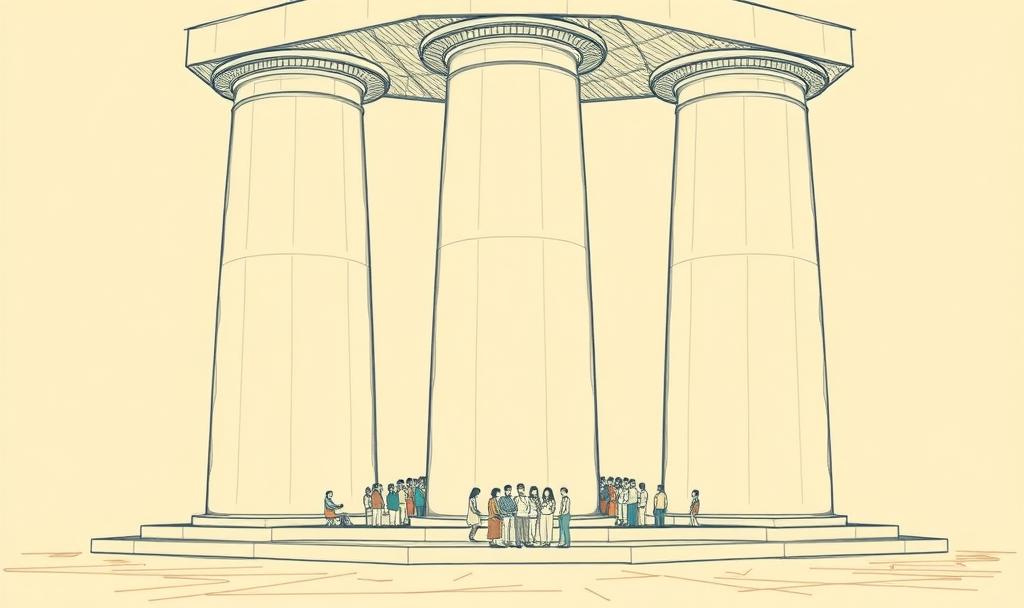
Economic stability requires three coequal pillars working in balanced tension. The profit sector becomes the wealth engine - private enterprise and AI generate raw economic power. The public sector becomes the circulation system - government channels wealth into human-centered work, not as redistribution but as circulation. The purpose sector becomes the human economy - mission-driven organizations where humans thrive in free-market entrepreneurship animated by purpose rather than profit maximization. Communities can build this third pillar immediately using existing legal frameworks, faster than policy can evolve.
You may have noticed I have changed the name of this publication to, Pillar 3. This is, of course, a nod to purpose-driven (aka nonprofit) sector I believe must rise to complete a new, balanced modern economic trinity.
The themes above should give you an idea of the concepts that will infuse the discourse here at, Pillar 3. Candidly, I'm amazed no one else is talking about nonprofits as technology we can use to mitigate AI impact and unlock its value, but everywhere I look—from policymakers to tech titans—no one seems to have any practical policy ideas for addressing the looming upheaval.
Here's My Plan
I'm going to publish a newsletter like this one every other week, and in the weeks between I'll post video podcast episodes. You'll also see me becoming much more active on major social media platforms. I welcome your engagement there as much as gregarious digital introvert can!
Together, we can shape these ideas and invite more people into the conversation. They'll bring more refinement along with their friends and colleagues. Maybe, just maybe, we'll create enough heat, a spark, ignition, a wisp of smoke that rises up high enough to be seen by yet more people looking for ways to protect human purpose and dignity in the face of unprecedented technological disruption.
If you're still reading this, especially those of you who have waited for me while I was away—thank you. It's really good to be back and I'll see you next week with more.
Ready to join the nonprofit revolution? Subscribe to both the newsletter and podcast, and share this with community leaders, nonprofit professionals, and anyone wondering what we can actually do about AI beyond hoping for the best.
Welcome back! What you say is really, truly interesting and thought-provoking. As an arts worker, many of us are concerned about AI replacing artists. While most of us know this may not be completely valid, and some are exploring AI to create, many are concerned about theft of their work (unauthorized use by AI platforms) and the replacement of artists (including graphic artists and designers) by AI-generated images. I recognize the budget constraints you must be under in creating your very informative posts, but as time goes on, perhaps you could consider at least promoting the use of graphic designers and artists instead of AI. Let's try and keep at least some of our creatives working.