


Welcome to this edition of The Process, a free weekly newsletter and companion podcast discussing the future of technology and philanthropic work.
If you enjoy reading and listening, please consider subscribing and sharing with your community!
Thank you!
Philip
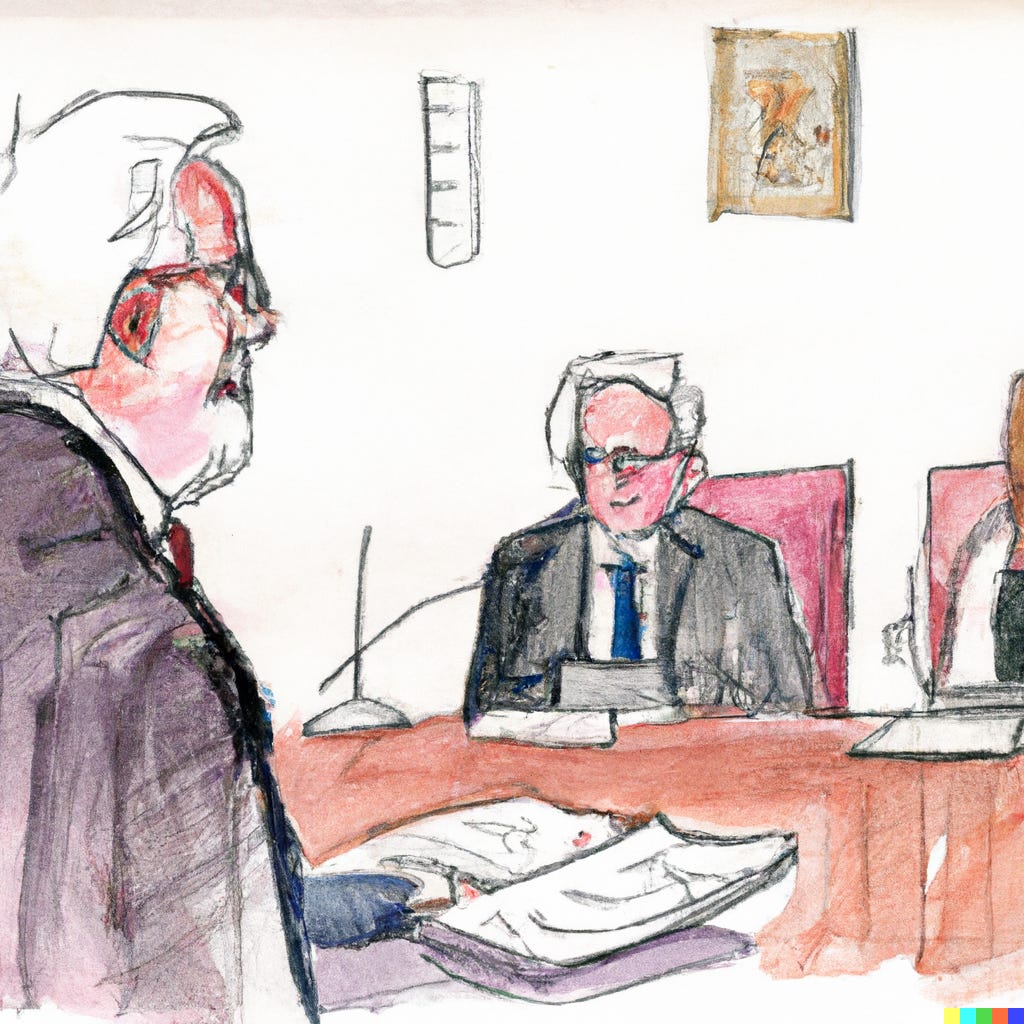
Last week, a lawyer threw himself upon the court's mercy when it was learned a 10-page brief he filed on behalf of his client cited several entirely fictitious legal decisions. To properly set the scene, this was not an elaborate ruse designed to fool the court. The error was discovered when the judge and opposing counsel simply could not find any record whatsoever of the precedents cited in the brief because all of them were fake. As I’m sure you’ve deduced, ChatGPT played a large part in the fiasco.
I have sympathy for this attorney because he made the same mistake tens of millions of people have made using the popular generative chatbot — he fundamentally misunderstood how the technology works and perceived reliability where large language models are, in fact, extremely brittle.
Growing up on a lake in Minnesota as I did, we were all warned as children about the perils of going out onto the ice in winter because of how difficult it is to determine its thickness. The surface can appear solid, and while some sections are thick enough to support your weight, others can give way in an instant.

To underscore just how opaque this hazard of generative AI truly is, this lawyer was actually aware of ChatGPT’s tendency to “hallucinate”. After asking the chatbot to write the brief, he also asked it if the court decisions it cited were real, to which ChatGPT confidently reassured him of their authenticity. This, of course, was another fabrication, and again his fundamental misunderstanding of large language models prevented him from knowing he was on thin ice.
Illusion of intelligence
The term “artificial intelligence” sometimes frustrates experts in the field because the word intelligence tends to mislead people into creating inaccurate mental models of what the technology really is and how it works. In the case of large language models like the GPT series, let’s deconstruct its “intelligence” into a set of abilities, in order to reconstruct a more accurate and useful understanding of how generative AI works.
Comprehension
When we type something into a generative chatbot, the first ability we perceive, but sometimes overlook, is the bot’s ability to understand the text. We can input anything and usually receive a reply that corresponds meaningfully to our query, which is quite impressive. Bots with a powerful ability to comprehend information are compelling in a similar way to how highly perceptive people are viewed as possessing an important marker of intelligence.
Confidence
Next, it’s worth noting how much more sophisticated current state-of-the-art chatbots are than those that we’ve encountered, say, in online customer service interactions over the last several years. Unlike these rigid predecessors, the best modern AI agents do not rely on a set of pre-defined options to respond, and, like a skilled improv actor, they adapt fluidly to almost any situation you throw at them. Their flexibility and inventiveness give them what has been described as confidence, another component ability that contributes greatly to the appearance of intelligence.
Speed
Another ability we experience and tend to assign to a chatbot’s smarts is its speed. In much less time than it takes me to input my query, ChatGPT can generate a far longer and comprehensive output. It can then add criteria, swap form, and change style effortlessly and instantaneously. Humans who are especially efficient at generating and modifying complex forms of information are usually considered to be particularly intelligent, and it’s reasonable to suspect many of us are assigning this standard to ChatGPT, as well.
Technical quality
Lastly, these bots write well. The most frequent critique I’ve heard is they sometimes use repetitive or monotonous narrative structures, but, in my opinion, these are easily remedied inconveniences that pale in comparison to their abilities as writers.
The sum of these traits — comprehension, confidence, speed, and technical quality — feels like, but does not equal intelligence. At least not in the way our unfortunate lawyer might have hoped or believed. The bot understood his request to draft a legal brief (comprehension), it fluidly acted upon his requests for additions and adjustments (confidence and speed), and the finished product read like a well-written legal document (technical quality), so where did he go wrong?
He went wrong by assigning one more ability to ChatGPT, which it does not possess — knowledgeability. Besides having the capacity to predict the next segment of a sequence according to its training, large language models don’t know anything.
Role-play
To grasp this point from a different angle, let’s role-play. You’ll play the part of the chatbot and I’ll play the part of the human user. The first step to creating a large language model is to train it on a vast amount of data. Models are given a set of parameters by which to evaluate the data, looking for patterns and associations within the numbers. Here’s your training data, YouGPT:
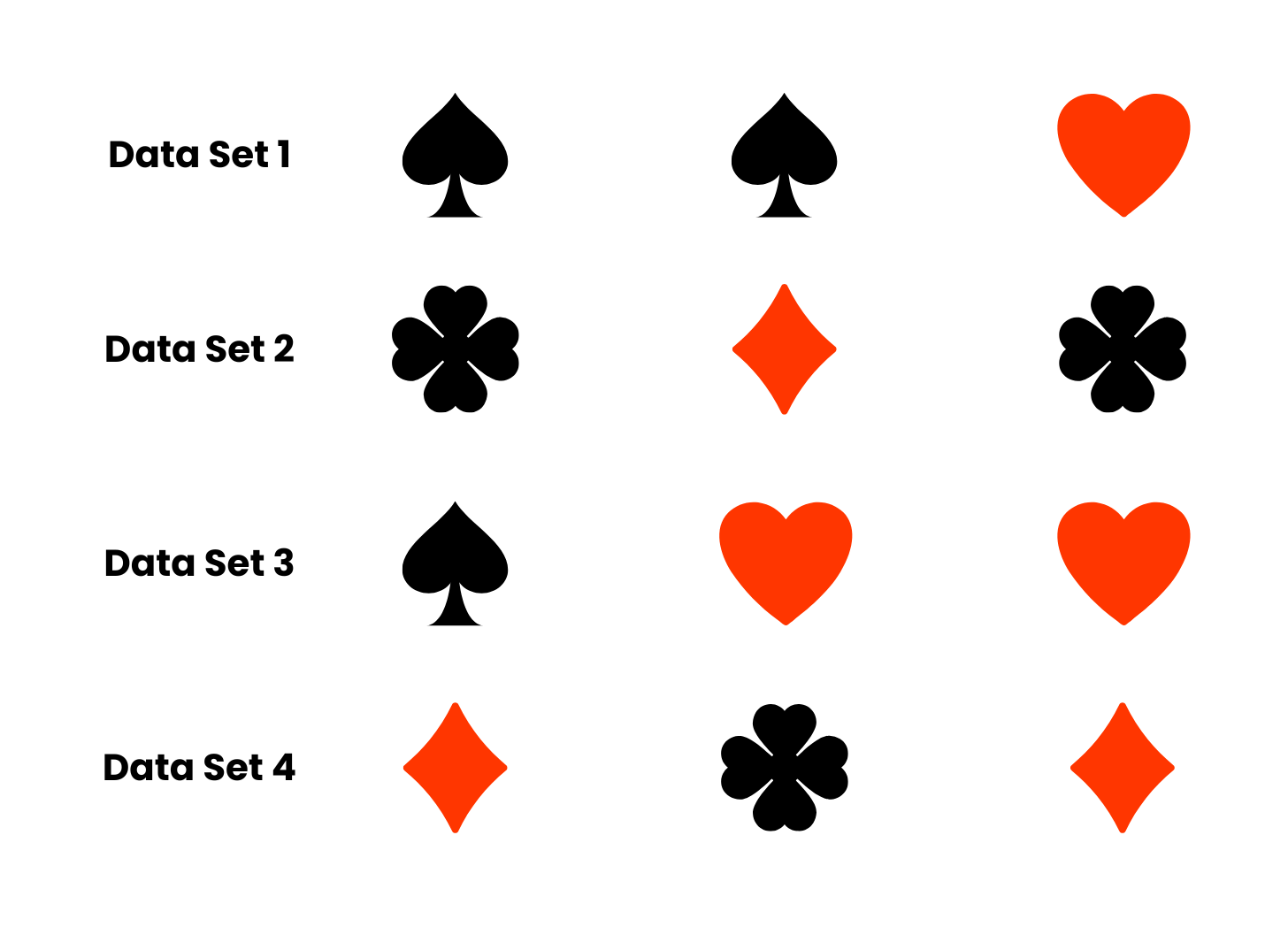
From these four sets of symbols, like the large language models, your goal is to figure out what patterns are present in order to be able to predict the next symbol that will appear next time you are presented with a particular sequence of symbols. Obviously, this data set is vastly simplified compared with the trillions of data points LLMs ingest, but the concepts are the same. You care about predicting patterns and not about what these symbols mean.
Now, I’ll play the part of the human interacting with YouGPT, and present you with a series of prompts:
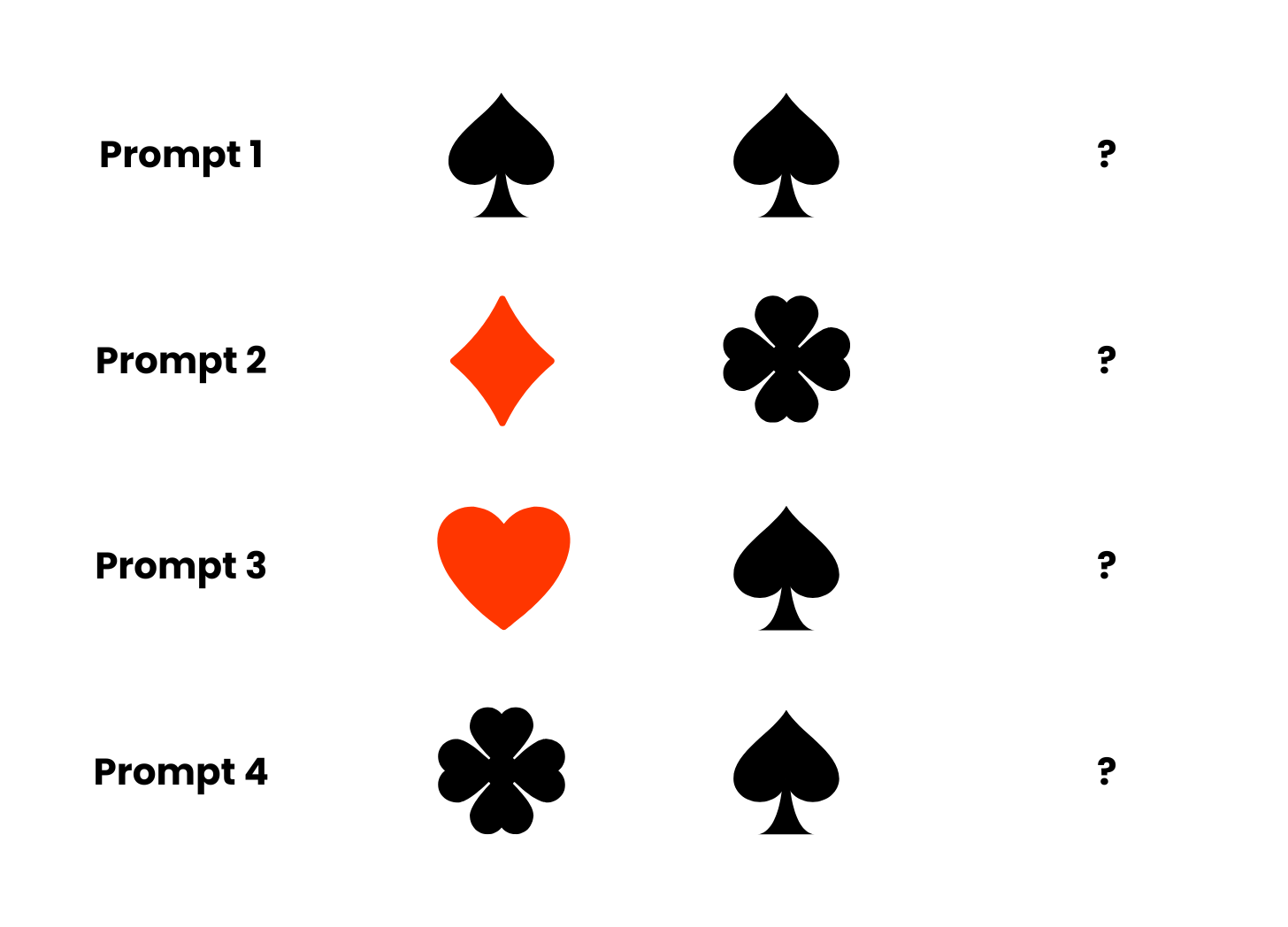
In the first prompt, you can see two spades that match a sequence in data set 1, so as a YouGPT, you might reply, heart. That’s a fairly straightforward example, which corresponds to a scenario in which a person gives a large language model a very simple prompt such as, “Mary had a little…”, which the model has seen many times in its training data and can safely predict, “lamb”, will come next.
In the next prompt, we see a diamond followed by a club, a sequence which appears twice in data sets 2 and 4, so again, YouGPT, can reasonably predict diamond comes next.
Prompt 3 gets a bit trickier because we have a heart followed by a spade, a sequence that does not exactly match anything in your training data, but you see spades are always followed by hearts, and so you predict a heart will come next.
Now, prompt 4 is a real head-scratcher for you since clubs and spades never interact in your training data. But don’t worry, at least you understand you’re working with playing card symbols (comprehension), you’re ready to go with the flow (confidence), you’re fast (speed), and your output will be a perfect instance of a symbol (technical quality). Most importantly, you don’t know and don’t care what any of these symbols means to me, the human receiving your outputs. You’re only trying to make a prediction so you reply, spade, because it’s your best guess and why not?
Holding both AI and human perspectives
Thanks for indulging me in this game — you did a great job! And, hopefully, this reenactment helps you understand how slippery the slope is as facts imperceptibly fade to fiction as large language models make larger and larger predictive leaps.
Just like in your role-play, the models are not trying to be deceptive, nor are they trying to be accurate — they’re trying to be predictive. Based on the sequence of words they receive, they try to generate a corresponding sequence based on probability, not by conducting research or organizing concepts as a person might. As we anthropomorphize these models, assigning traits of intelligence to them, we obscure from view what they really are — prediction machines.
With your perspective role-playing as an AI, you can look back on the lawyer’s interaction with ChatGPT, and see how the chatbot must have quickly and confidently produced sequences of words that looked like authentic legal documents present in its training data. When asked if the citations were factual, this question, itself, became just another pattern, similar to other “Is this true?” patterns in the training data, which are frequently followed by “Yes! Of course!” patterns.
This attorney took one for the team we’re all part of — humans learning to live and work in an age of AI. We can all relate to his mistakes and learn from them. In his apology to the court, he did not pledge to abstain from using generative AI assistance in the future, instead committing to a far higher standard of diligence. While this subtle caveat may not have earned him any points with the judge, he seems to also recognize that promising not to use AI again is an untenable position, as well.

Not only do kids in Minnesota learn how to safely navigate frozen lakes, an entire category of recreation is literally built upon the ice. Each winter, Lake Mille Lacs becomes a town of significant size in the state as more than 5,500 ice houses pop up on its more than 200 square miles of solid ice, complete with named streets, shops, and other modern amenities.
These folks know exactly how thick the ice needs to be in order to be safe. Likewise, we need to look beneath the surface of generative AI systems to know when they are reliable and useful, and when there is potential for danger or harm. This will help us set the right precedent in the case of Humanity v. AI.
Thanks for reading this edition of The Process. Please share and comment or you can email me at philip.deng@grantable.co
Philip Deng is the CEO of Grantable, a company building AI-powered grant writing software to empower mission-driven organizations to access grant funding they deserve.
Happening Today!
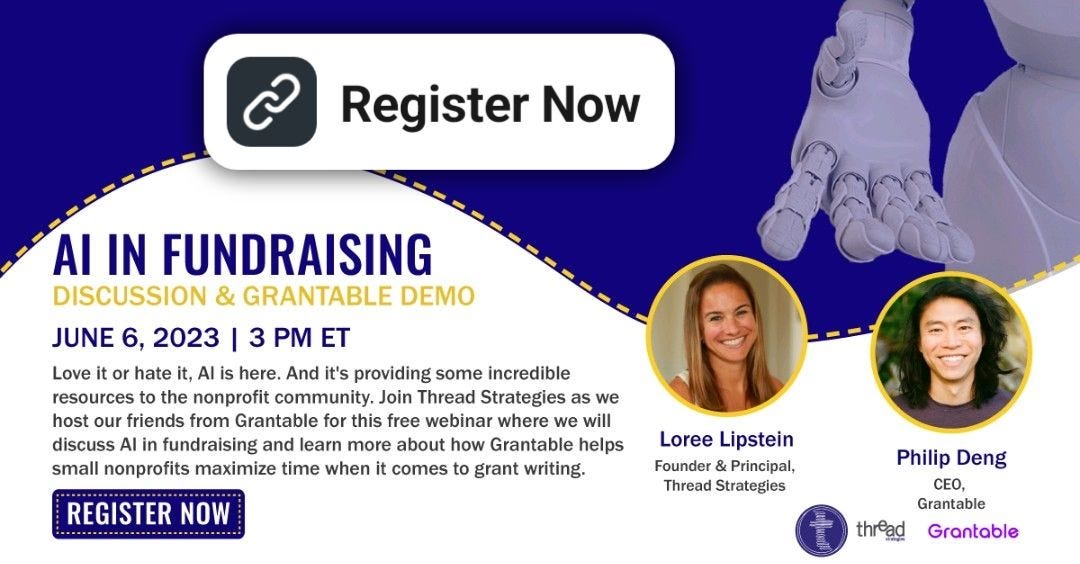
I’m very excited to join Thread Strategies and Loree Lipstein for a conversation about #ai and #fundraising.
These opportunities are where I regularly encounter the most thought-provoking questions. Please join us!