



Welcome to this edition of The Process, a free weekly newsletter and companion podcast discussing the future of technology and philanthropic work.
If you enjoy reading and listening, please consider subscribing and sharing with your community!
Thank you!
Philip
Not too long ago, if you heard someone talking about alignment problems, it likely meant a visit to an auto mechanic was in order. These days, discussions of alignment problems are a hot topic in the field of artificial intelligence. In simple terms, AI alignment problems arise as autonomous systems become smarter and ensuring they operate according to the wishes of human beings becomes both more important and more challenging.
Perhaps one of the most well-known depictions of a misaligned autonomous system is the famous scene in the 1940 Disney film, Fantasia, where Mickey Mouse takes on the role of the sorcerer’s apprentice. When the master sorcerer leaves his magic hat unattended, Mickey, who has been laboring away at his assigned chores, decides to use the hat’s power to automate his water-carrying task by charming a broom to do his work for him. As the broom begins diligently filling up a cauldron, Mickey falls asleep and dreams of all the other magical feats he will perform.
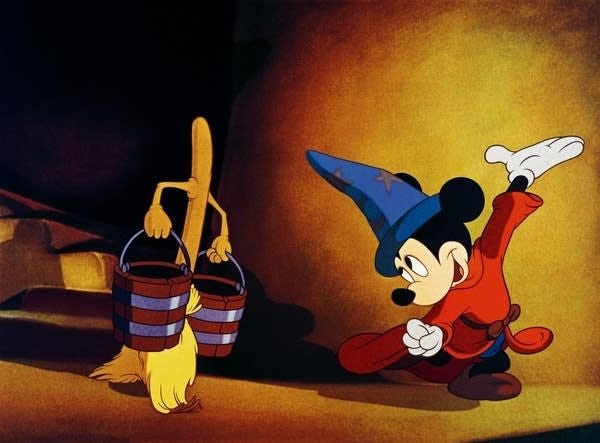
Upon waking, Mickey is distraught to find the entire room filling up with water and struggles in vain to stop the charmed broom. When he resorts to violence by smashing the broom to splinters, the situation is made exponentially worse as each of the shards grows arms and transforms into another water carrier. Luckily for Mickey, the sorcerer returns and rectifies the situation with a single spell cast, and reprimands his apprentice for his foolishness.
Parallel perils to the Disney classic are only too easy for us to see as we enter the era of AI. As intelligent software grows more and more capable of executing increasingly complex tasks for us, we will surely lean into these new conveniences and efficiencies, especially when doing the work ourselves is particularly painful, or it’s more lucrative to use AI. One major difference is, if things go wrong for us, there is no sorcerer to save the day.
AI alignment is unsolved and constitutes a significant area of research and work in the field. A framework I find helpful for thinking about AI alignment is to divide the challenge into an outer and inner dimension. Outer alignment involves carefully defining human-aligned goals and values for systems to pursue, while inner alignment is the work of ensuring the actual computational processes support those pursuits.
Mickey’s problems began with outer misalignment as he gave the enchanted broom the goal of pouring buckets of water into the cauldron, rather than the more specific and aligned goal of filling the cauldron to its capacity. When Mickey tried to stop the brooms from continuing to fill water, he discovered it was impossible to take their buckets or to obstruct their path or even to destroy the brooms entirely. These failures might analogize to an AI system whose creators did a poor job of creating inner alignment.
In order to create AI alignment, software engineers spend a great deal of time thinking about how to accurately communicate goals and values, how to ensure systems understand and adhere to instructions, how they learn and change in novel situations, and how transparently human operators can see and understand all that is happening inside these systems.
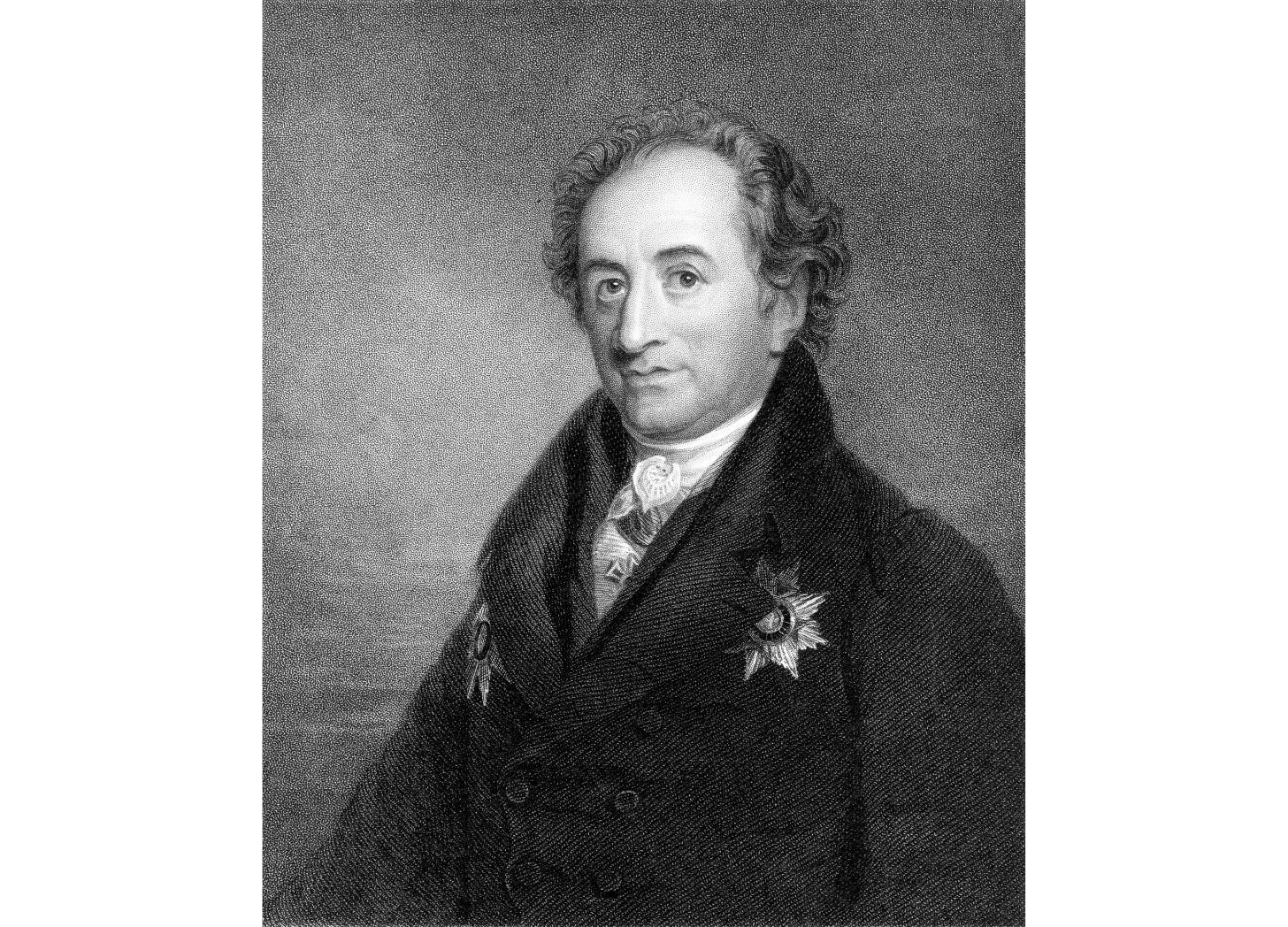
When Johann Wolfgang von Goethe wrote the original poem, The Sorcerer’s Apprentice, in 1797, it’s unlikely he was envisioning autonomous systems like ChatGPT. How could a fable written more than 200 years ago so aptly capture current events? It was the case in Goethe’s time as it is now — alignment problems are a feature of human ambition.
While most nonprofit professionals will not be involved in engineering AI alignment, directly, the sector as a whole has important insights to offer the endeavor because so many nonprofits exist to counteract the misalignment of the most powerful system humans have ever created — capitalism.
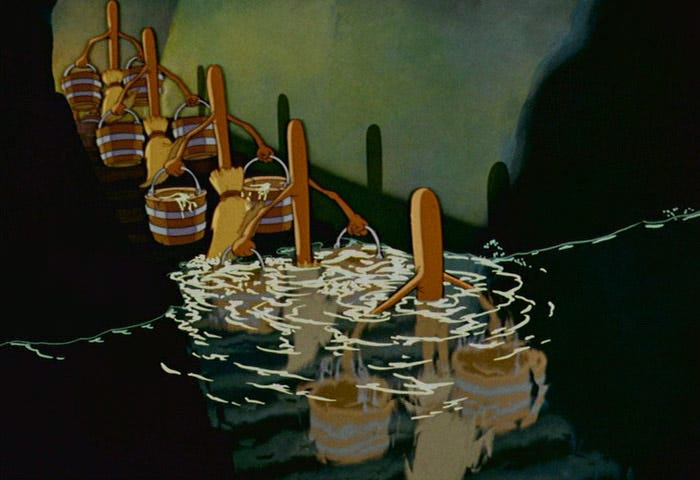
Modern capitalism is unrivaled in its ability to generate wealth and to encourage technological innovation. However, in this dominant global economic system, we are not Mickey (he signifies human ambition), nor are we the Sorcerer — we are the brooms. Each of us, in our own way, continually fills a metaphorical bucket with money and pours it into a cauldron of consumerism, day in and day out, for the duration of working life. Profit-seeking, while astonishing in its power to marshal the collective effort of billions of people, and to beget more profit, is also creating massive consequences humanity must now rectify as a matter of survival. The water is rising, literally, without a magic spell to make it stop.
„In die Ecke
Besen, Besen!
Seids gewesen,
denn als Geister
ruft euch nur zu seinem Zwecke
erst hervor der alte Meister!”
“Back now, broom,
into the closet!
Be thou as thou
wert before!
Until I, the real master
call thee forth to serve once more!”
Der Zauberlehrling (The Sorcerer's Apprentice)
Johann Wolfgang von Goethe - Translation by Brigitte Dubiel
In the poem’s final stanza, the sorcerer retakes control of the magical brooms instructing them to serve him, the real master. Wisdom, not intelligence, is what separates the apprentice from the real master. To develop in positive ways, artificial intelligence will require authentic wisdom embedded at its core.
In this pursuit we must draw from the deepest repositories across our shared human experience, and listen to wise voices, many of whom are often ignored. I am seeing more and more clearly how important the nonprofit sector’s role will be in our attempt to align AI to support thriving societies and a healthy planet. The nonprofit sector is the world’s laboratory for seeking human-centered innovation. What are our values? Why do they matter? How do we live them?
As we answer these questions, we receive wisdom, a deep understanding, of the self and the system, attained through experience, and manifest in graceful action, which leads to enduring and just benefit.
Thanks for reading this edition of The Process. Please share and comment or you can email me at philip.deng@grantable.co
Philip Deng is the CEO of Grantable, a company building AI-powered grant writing software to empower mission-driven organizations to access grant funding they deserve.
If you’re up for more
Please consider checking out this podcast I had the chance to be a guest on with Holly Rustick, the astonishingly talented, knowledgable, and fun host of the Grant Writing & Funding podcast.
Very thought-provoking -- yet again! The analogy of Mickey and the buckets to AI alignment is fantastic. I need to noodle on your commentary about both AI alignment and capitalism. Having just moved into a new house, I feel a lot like a broom today, but in a much more pedestrian and literal sense! I'm also inspired by your depiction of nonprofits in understanding what can happen if things are unaligned (or out of balance, to extend your car mechanic theme). Great observation ... I'll fully credit you as I use many of your ideas!