



Welcome to this edition of The Process, a free weekly newsletter and companion podcast discussing the future of technology and philanthropic work.
If you enjoy reading and listening, please consider subscribing and sharing with your community!
Thank you!
Philip
By coincidence, in the last two weeks I’ve had the opportunity to speak with two organizations that have tried to apply machine learning (ML) to datasets of grant proposals in an effort to distill the traits of successful versus unsuccessful applications. Both labs arrived at roughly the same result, which was a slightly-above-random-chance prediction algorithm. Translation: they couldn’t really tell the difference between awarded and rejected proposals.
For folks with grants experience, this result may not come as much of a surprise. The algorithms seem to confirm what many of us suspect, which is the quality of grant proposal writing is only one part, perhaps even a secondary factor in what ultimately determines the fate of an application.
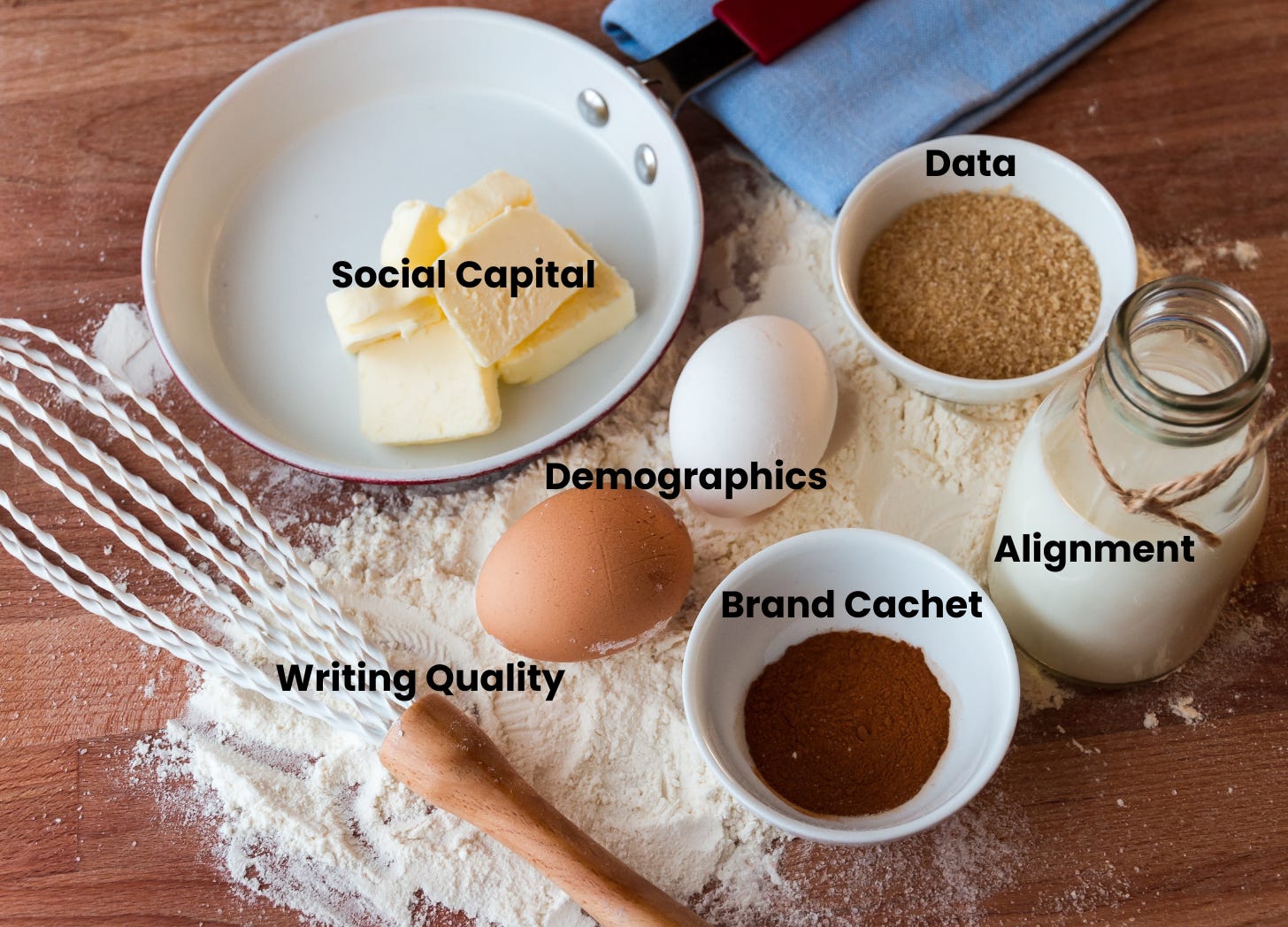
Assuming a standard baseline of writing quality and adherence to grant guidelines, factors like race, social capital and relationships, and organizational brand cachet also play a large and opaque role in the evaluation process. The proposal narrative, itself, is almost certainly a less relevant factor in the decision-making process than we’d like to believe. As well-known social experiments show resumes with more culturally or racially indicative names receive fewer invitations for job interviews, we can surmise similar biases are embedded within the grants sector, as well
Let’s imagine a lab discovered an algorithm to optimize grant proposal narratives to maximize the chance of receiving grant awards. This algorithm would be cheap and easy to use and soon every application could be instantly reformatted into the style and tone most preferred by a given grantor. Grant reviewers would suddenly find themselves with dozens, hundreds, or thousands of exquisitely written narratives to choose winners from among.
Maybe this is a step in the right direction, to eliminate writing quality from selection criteria by using the writing abilities of large language models, like ChatGPT, to bring everyone up to a proficiency standard. After all, should we really care whether or not a efficacious conservation group’s grant application reads like it was written by Mary Oliver? Probably not, but that would be one beautiful and evocative proposal.
Moving along, let’s assume in this post-AI-tuned scenario, all grant proposals are superbly written for the reviewer’s objectives and readability. The remaining applicant evaluation criteria include the quantitative components of the grant proposal, the data and budget, along with the external contextual factors mentioned before. Let’s take a look at each piece, individually.
Data, the quantified impact or result of the work for which a grant would support, will continue to present the greatest challenges at the point of collection. Moving from real world events to cells on a spreadsheet is often imprecise and extremely laborious for teams working in challenging circumstances with limited resources. Where AI may begin to help is by combing through more of an organization’s electronic content to glean bits of data, or to be able to read other forms of activity capture, like photos and videos to, say, determine the number of participants at an event based on a group photo and the associated time and location data.

Once data is in digital format, processing and revealing the stories within the numbers is rapidly becoming much easier and more exciting. Ingesting digital content and revealing complex patterns is exactly what systems like GPT do best. It will be like we’re putting on a new pair of glasses with an updated prescription, which will show us some organizations are not as impactful as we once thought, while others have been overlooked in terms of what they have actually achieved.
When AI can approximate basic levels of support currently provided by fractional CFOs or comptrollers, the budgeting portion of grant-seeking could also become much easier. In my experience, shaping the numbers so grantors can review an applicant’s financial status in particular formats is frequently one of the most time-consuming and least useful parts of an application, especially when the task is simply to move amounts around until they meet specific criteria. If the purpose of a budget is to determine fiscal health and responsibility, there are easier and more effective methods, which AI can help to bring about.
This leaves us with the external contextual factors that influence grant-seeking outcomes such as the demographics of grantors and applicant organizations and their social capital networks. In other words, who you know and how you know them. The lessons of the last two decades in the evolution of social media lead me to believe we should not try to build the “Facebook for grants”. Social media platforms seem to reliably amplify bias and exacerbate fragmentation far more than they help us to unite and discover one another.
A more exciting direction I see is to use AI technology to scale up trust-based grant-making, which is a movement to make grant funding more equitable by reshaping the sector along the following set of values. As the name of the movement implies, much of the vision involves shifting the traditional power dynamics between funders and applicant organizations to reimagine these relationships in ways that can lead to more equitable and effective grant funding.
One persistent problem I see with this laudable approach is that building trust and relationships requires an enormous amount of time, which the already overburdened applicant organization do not have more of to invest. Where I imagine AI systems being able to expand the trust-based movement is to make it possible for grant funders to give money to organizations that are a fit for their giving priorities, but have never even applied for their funding. How about that for next-level trust!
When an organization is awarded a substantial grant by a reputable grantor, other funders should be able to reasonably assume a sufficient level of due diligence has been performed and the grantee was deemed worthy of funding. Likewise, if an organization consistently reaches the later stages of evaluation, but perhaps hasn’t yet won a major award, all that vetting should also signal the strong worthiness (and bad luck) of the organization. These algorithms could be tuned to help funding flow to strong organizations that are facing the most difficult time reaching their fundraising goals. The patterns are relatively simple ones that increasingly powerful pattern recognition engines like GPT and other large language models could easily ingest.
The outputs of these models could interlace to become an entirely new kind of data-driven network where human-written grant proposals are analyzed and replicated to extend the relevance of each grant application across the entire network. In the same way a spider can sense activity throughout its web, a strong yet unsuccessful grant application to funder A, might result in small automatically generated awards from distant funder B.

Trust can become the most beautiful and foundational part of a funding relationship, but building the billions of trust-based funding relationships we need between funders and applicants, may require more time than we have to address the collective challenges we face. Building those relationships between the funders, themselves, represents a far smaller and thus much more achievable number of connections to form, especially with the assistance of technology.
I know from the grant applicant’s perspective, it would feel a lot better knowing that even if this grantor doesn’t fund my excellent proposal, another one just might.
Thanks for reading this edition of The Process. Please share and comment or you can email me at philip.deng@grantable.co
Philip Deng is the CEO of Grantable, a company building AI-powered grant writing software to empower mission-driven organizations to access grant funding they deserve.