Welcome to this edition of The Process, a free weekly newsletter and companion podcast discussing the future of technology and philanthropic work.
If you enjoy reading and listening, please consider subscribing and sharing with your community!
Thank you!
Philip
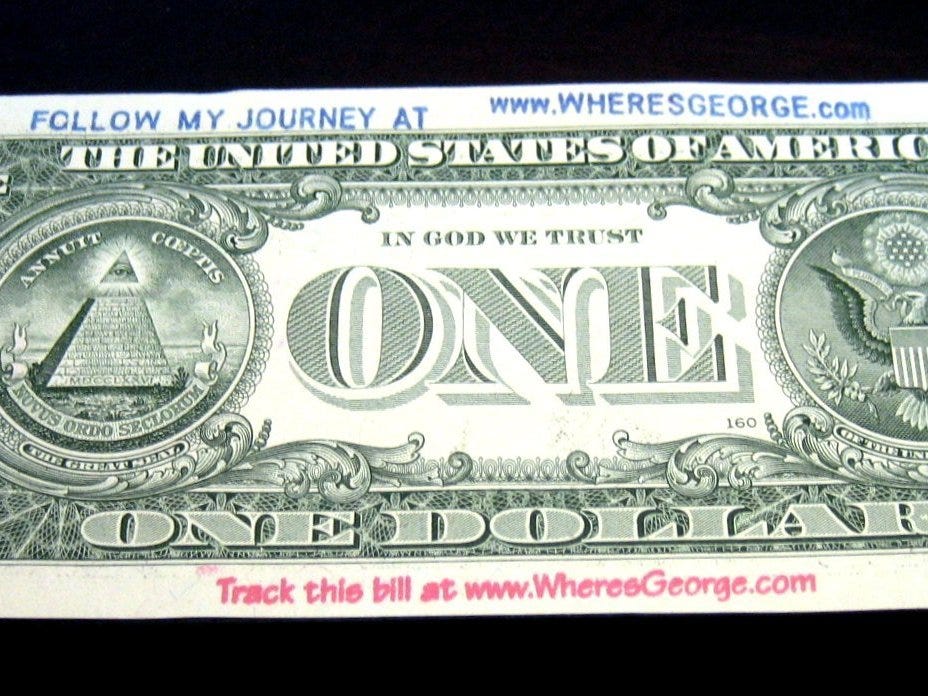
Have you ever seen one of these bills with the wheresgeorge.com stamp? This project to track the travels of paper currency began on December 23, 1998 and has since amassed more than 300 million tracking instances according to the website. In case you do come across a bill with the “FOLLOW MY JOURNEY” stamp on it, you can go to wheresgeorge.com, enter the note’s serial number, and find out where it has been prior to reaching you.
I’ve been thinking about the velocity of currency because as a society we seem to have lost our appreciation for the original and most fundamental benefit of exchanging economic value using money — speed.
Over millennia, human beings have found faster and faster ways to transact, to move economic value from one place to another, by creating money with less and less intrinsic value. Beginning with essential material resources like food and livestock, over time we’ve substituted shells, precious metals, paper currency, digital dockets, and recently blockchain, to name a few stops along the evolution of money. We’ve gone from exchanging items we can literally eat, to lines of code that have no intrinsic value at all.
People chose to make this transition because of the overwhelming advantages we gain from being able to conduct commerce more rapidly and with greater ease. One could accurately describe money as the lifebloodof the economy, and like blood carrying nutrients and oxygen throughout a body, money moves economic potential throughout society, allowing for expenditures ranging from billions of dollars to fractions of a cent, across trillions of transactions per day.
Coins and red blood cells
I am not a physicist or an economist, but to my untrained eye there are even more observable parallels between how matter and money behave. In addition to motion, money seems to show characteristics similar to how matter is described by Newton's law of universal gravitation, which quantifies the force of attraction between two masses. Money also seems to have ‘gravitational’ force in that it is capable of being used to make/attract more money, and the larger the sum, the greater the force of attraction — like Newton’s fourth law.
I tried, without success, to use ChatGPT and the WolframAlpha plugin to see if I could find any meaningful mathematical similarities to support this piece. Any readers with a better grasp of physics, economics and mathematics who would like to explore this with me, please get in touch!
Even without equations to back me up, the phenomenon can be seen with common sense observation, and in longitudinal wealth inequality studies, such as this one by the Pew Research Center. From the report describing the period in the United States from 2001 to 2016:
Median wealth for upper-income families: Increased by 33%.
Median wealth for middle-income families: Decreased by 20%.
Median wealth for lower-income families: Decreased by 45%.
As a society, we seem simultaneously fascinated by the names on the latest billionaires index, the marquee measure of hyper-wealth accumulation, and also increasingly concerned with the urgent problems caused by extreme concentration of resources. In the same Pew study in 2019, before the global pandemic, 61% of Americans surveyed felt there was too much wealth inequality. I suspect the number would be even higher if the survey were conducted today.
To quantify wealth distribution, we often use protocols like the Gini index, also known as the Gini coefficient, which is a measure of income or wealth inequality within a country. It is a number between 0 and 1, where:
0 represents perfect equality (everyone has the same income or wealth).
1 represents perfect inequality (one person has all the income or wealth, and everyone else has none).
The formula for the Gini coefficient plots the cumulative percentage of total income received against the cumulative percentage of the population, starting with the poorest individual or household.
Here's a more intuitive way to understand the Gini coefficient:
If the Gini coefficient is 0, the Lorenz curve would be a 45-degree diagonal line, meaning every person or household earns exactly the same amount.
If the Gini coefficient is 1, the Lorenz curve would be flat along the bottom axis and then shoot straight up at the rightmost edge, indicating one person or household has all the income or wealth.
While interesting to see how different communities and countries stack up (the U.S. is currently the most unequal among G7 countries), this kind of framing inevitably leads to a quixotic quest to figure out what the right coefficient of wealth distribution should be.
What might be gained if we turned our attention back to the original killer feature of money — its ability to move wealth quickly? To be clear, I’m not talking about speed in the sense of tools like Venmo, which allow me to send money very quickly, but rather a theoretical concept of the average rate of movement of all units of currency within an economic system. Wheresgeorge.com is a great way to illustrate what I’m talking about — imagine every dollar in the U.S. system was being tracked in a similar way and we could calculate an average rate of speed that all dollars were being transacted between parties.
We would be measuring something much closer to the flow of wealth throughout our system, data that could supplement our current standard metrics like GDP. The more I think about it, the more this seems like it would be useful information to have. If we again turn to the analogy of blood, imagine if we went to the doctor’s office and they measured the total volume of blood in our bodies, or how much blood was currently in a particular body part, instead of checking the health of our circulation by measuring heart rate, blood pressure, and oxygenation. Likewise, it seems we place too much importance on fixed measures of wealth, especially particular points of accumulation like Elon’s $244 billion, and overlook the nature of its movement, or lack thereof.
So how can we get back in the flow, so to speak? There are systems for allocating wealth that are designed to recirculate and target wealth to under-resourced places, such our tax system and targeted investment programs. These methods often come under attack as forms of illegitimate taking and bestowing, respectively. Constant derision of government institutions and initiatives combined with ceaseless calls to cut taxes are familiar to all of us. Recently, Edward Blum, the activist responsible for bringing the lawsuits that resulted in the overturning of affirmative action in college admissions over this last summer, is now turning his attention to bring the same challenges against private investors who focus their funding decisions based on specific demographics.
A VC fund focused on exclusively investing in Black women business owners, a group that receives less than .02 in funding, is being sued by a group founded by the conservative activist [Blum] who played a pivotal in the U.S. Supreme Court’s June decision to ban affirmative action.
Source: Essence - Black Woman-Focused VC Fund Sued For Discrimination By Man Behind Affirmative Action Ban
Numerous communities including those of under-represented founders, other investment funds, and justice activists are strongly condemning the lawsuit, and yet I fear many of the same arguments this U.S. Supreme Court found compelling in the college admissions case, may also hold sway in this case.
Two data points does not make a trend, but it seems likely that other specifically targeted wealth transfer initiatives, especially those that explicitly call out racial or marginalized groups, are now at least at greater risk of be challenged or made illegal by similar court rulings in the future. Such a hypothetical situation could potentially implicate an enormous portion of philanthropic funding given out by public and private sources, which is commonly targeted to the help the same groups. It goes without saying, this would be devastating to the nonprofit sector and the people served by it.
As Supreme Court Justice, Ketanji Brown Jackson noted in her dissent in the affirmative action decision, “Deeming race irrelevant in law does not make it so in life." If zealots like Blum continue to attack targeted redistribution of wealth and economic opportunity and find support from conservative judges, it makes sense for our sector to begin thinking about alternative frameworks to allow for continued progress toward real equity in life.
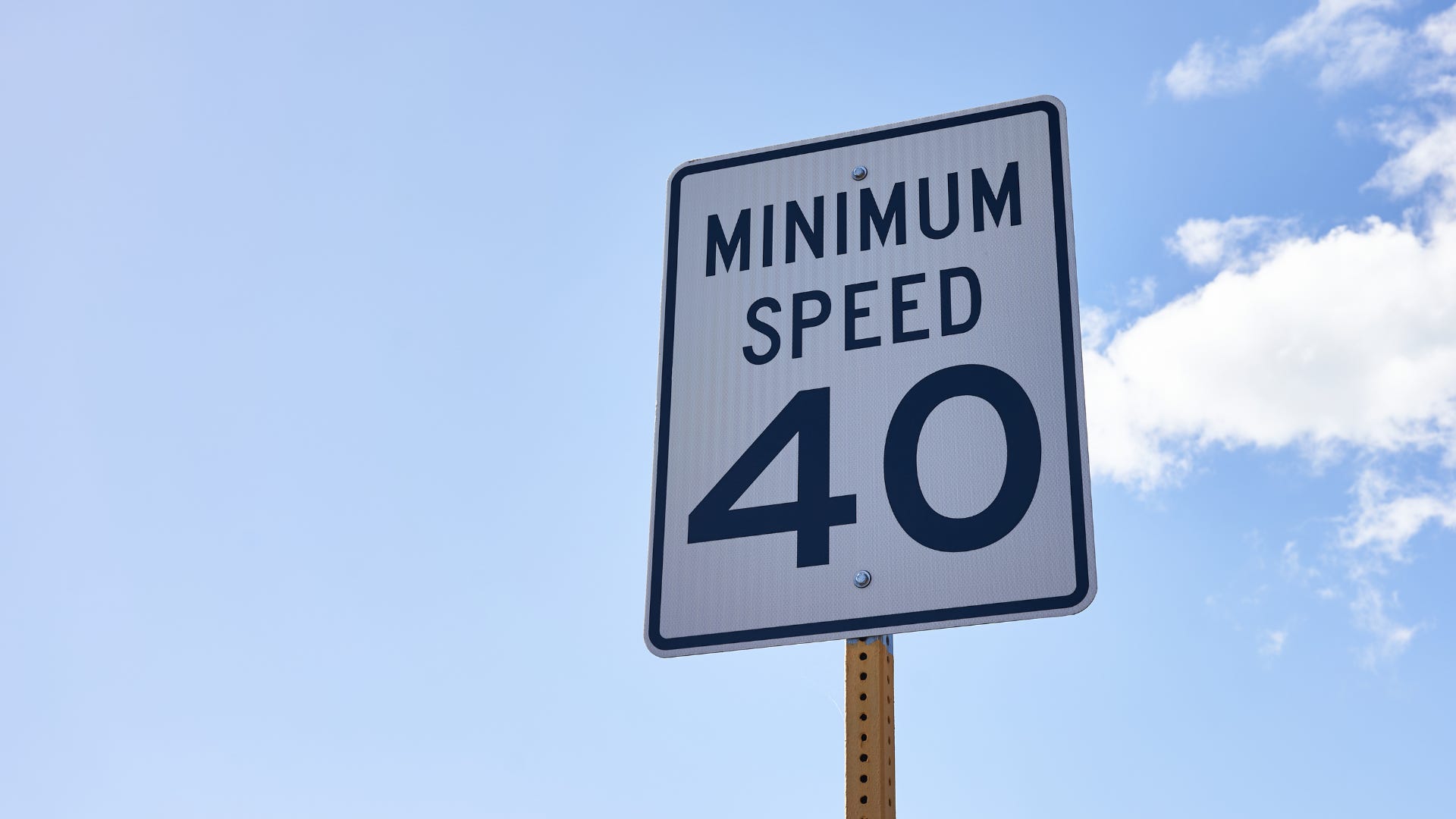
Here I return my earlier interest in the movement of money, or lack thereof. Leaving aside the undoubtedly complicated matter of actually implementing what I’m about to say next, please bear with me for the sake of intellectual exploration — what if it were possible to measure and enforce a minimum speed limit for money in our economy? And, what if our government paid attention to the status of the circulation of wealth at least as much as it did to other accepted measures of economic health?
A sign marking a minimum speed of 40 miles per hour
Again, suspend your disbelief for a few more sentences — such a focus might lead to thinking and development of policy targeted not at reallocating certain amounts or percentages of wealth from one specific group or tax bracket to another, but to encourage overall healthy circulation of wealth throughout society, which would benefit the growing majority of people who are being left behind.
What if we considered the ‘gravitational force’ of money, its self-evident ability to attract more of itself, to be more like a natural phenomenon, like regular gravity? Instead of holding up individual wealth outliers as investment or entrepreneurial geniuses, we might come to see them more like financial ‘black holes’ that threaten to swallow everything around them, a condition to be addressed by increasing the flow in our economy.
Charitable foundations are only required to distribute 5% of total assets per year, and approximately 120,000 of them are holding $1.2T. A new regime that recognized the need to counterbalance money’s intrinsic force of attraction by encouraging the flow of wealth throughout the system, could use foundations, ostensibly entities dedicated to giving rather than holding, to bolster economic health significantly.
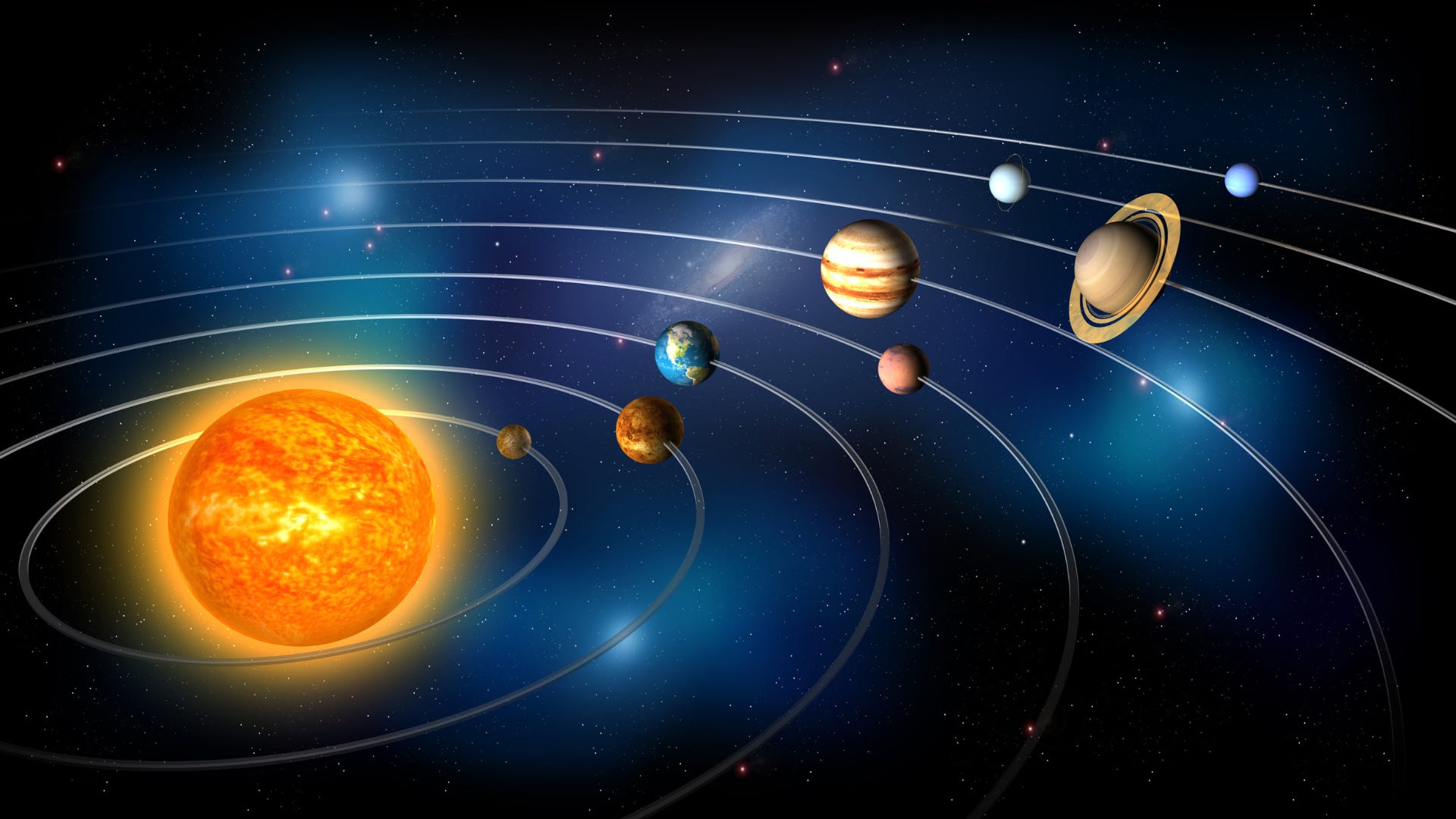
Planets orbiting the sun
Balance could come to be defined, not as a particular distribution of wealth, like a Gini coefficient, but something akin to orbit, where forward motion and gravity harmonize to create a perpetual cycle.
We have so greatly reduced transactional friction in the modern digital economy, yet we have done so little to encourage the movement of wealth. There is much more than semantic difference here between the awesome ability of wealthy people to ever more rapidly move and and make money, and while the movement of wealth itself is slowing to a crawl.
Unlike the laws of physics, which we cannot change, we have significant control over monetary policy. Just as we’ve learned to leverage Newton’s insights to unleash technologies and abilities unimaginable to Sir Isaac, so too might we be able to create better systems for ensuring equitable access to wealth building and opportunity, if we can begin to look at money like a force of nature — it’s time to move.
2023 Fundraising.AI Virtual Global Summit
Please check out the upcoming 2023 Fundraising.AI Virtual Global Summit taking place on October 23 and 24, 2023, which is free to register and I hope many readers will participate. The Summit will virtually bring together more than 30 speakers to facilitate numerous tracks of thoughtful discussion, and for all of us to build this community as a force for good. Please join us!
Philip Deng is the CEO of Grantable, a company building AI-powered grant writing software to empower mission-driven organizations to access grant funding they deserve.