


👋 Hi Pillar 3 Subscribers, I’m Polly. Philip and I first met during a startup accelerator back in 2021, and we’ve stayed connected through our shared love of creativity and technology. I’ve spent my career at the intersection of product design, art, and entrepreneurship - everything from founding my own startup to leading product design programs at larger organizations.
I’m thrilled to be writing here on Pillar 3 and sharing my thoughts, ideas, and observations with you. Writing has always been my way of exploring creativity, technology, and how we engage with the world, and I can’t wait to dive in and see where the conversation takes us.
We all know social media is bad. We all know Facebook is the new Philip Morris, denying the empirical evidence that it causes anxiety, depression, and childhood body dysmorphia. We know this.
While I’d like to say social media is a one-to-one comparison to cigarettes, it’s not. There is a level of synthesized value you can attain from these apps — entertainment, friendship, creative inspiration. However, that’s what makes them so dangerous.
Yet we still consume it. We allow our children to consume it. And worse, many of us look to it for our news, opinions, identity, and community.
It’s a kind of voluntary brainwashing that convinces us we’re waking up while teaching us to obey.
As the technologies advance more and more, we need to keep banging the drum, hoping that people wake up from their dopamine-induced comas of consumption.
Because when you create distance, true distance, you begin to reconnect with your own voice, identity, and values… and that is a powerful thing.
How I create distance:
I’ll start with this.
I have social media, and I’m not above a late-night doom scroll from time to time.
However, when I’m ready to close the app, I never just close the app — I delete it from my phone entirely.
This goes back to a core method I use around good habit creation and bad habit prevention.
A few years back, I read a little book you might’ve heard of called Atomic Habits.
That book, for me (and millions of others), changed the way I approach nearly everything in life. While I’d love to say it turned me into a fully optimized human who wakes up at 5 a.m. to run… that’s not me. What it did do, however, was give me a framework for how to approach everyday challenges and goals.
Because social media releases dopamine, just seeing the app on your phone becomes a cue — one that elicits a craving and encourages a response to open it.
It’s like having a freshly baked cupcake sitting on your kitchen counter 24 hours a day.
Every time you walk in, you crave that warm, fluffy cake and rich chocolate icing.
But remove the cupcake?
It’s shocking how little you even think about cupcakes.
The same is true for me with social media.
I need to remove the trigger — the app icon — that sparks the craving.
Without it, I rarely think about it at all.
What distance has shown me
People often rave about time off social media:
“I walked outside.”
“I played with my kids more.”
“I slept better.”
All true.
But for me, the most striking part isn’t the benefits of being off social media - it’s the hyper-awareness that hits when you come back.
You start to more objectively observe people still on it. Friends. Family. Strangers on airplanes. And you feel the stark reality of what it does to us when we have no boundaries in place.
Three Observations:
Before I go on to share my three distinct observations — I don’t consider myself above anyone who uses social media.
I’m deeply susceptible to it. I’m intertwined in this world, too.
And that’s exactly why it feels so important to pull at these threads and understand what’s happening to us — collectively.
Observation 1: Our Nervous System
Whenever I re-download an app, I inevitably get stuck scrolling.
Sometimes I just want to check Facebook Marketplace or respond to a message — but before long, I’m pulled into the feed.
Like everyone else, I’m hit with a mix of helpful and horrifying content: a parenting tip here, a graphic war image there, a political outrage post to top it off.
While scrolling, it feels like business as usual.
But the moment I put the phone down, I feel it — my nervous system is wrecked.
I’m angry.
I’m sad.
I’m inspired.
I’m disheartened.
I suddenly have ten new ideas I want to chase.
It’s everything all at once.
⸻
It reminds me of the reverse culture shock I felt after living in Cambodia for four months with only my camera and trusty yellow flip phone, “Banana.” I was essentially off-grid.
When I flew into Melbourne, I was overwhelmed — bombarded by ads and the pressure to buy everything.
In Cambodia, I’d lived outside that machine. With fresh eyes, I could finally see how consumer culture had been shaping my nervous system.
That night, after putting my bags down, I cried. I realized I was re-entering the treadmill of consumption.
⸻
I feel the same way after a long break from social media.
It’s overwhelming to realize how much constant stress we normalize.
We’ve accepted that this hyper-stimulated, anxious state.
And the saddest part? Many of our kids may never know what it’s like to live without it.
Like the frog in boiling water, these technologies evolve so gradually that we barely notice how hot the water’s become.
Observation 2: Processed Media
We already know social media has an impact.
But unlike cupcakes, alcohol, or processed food, we’ve normalized its constant use.
Yet social media is processed food — for your brain.
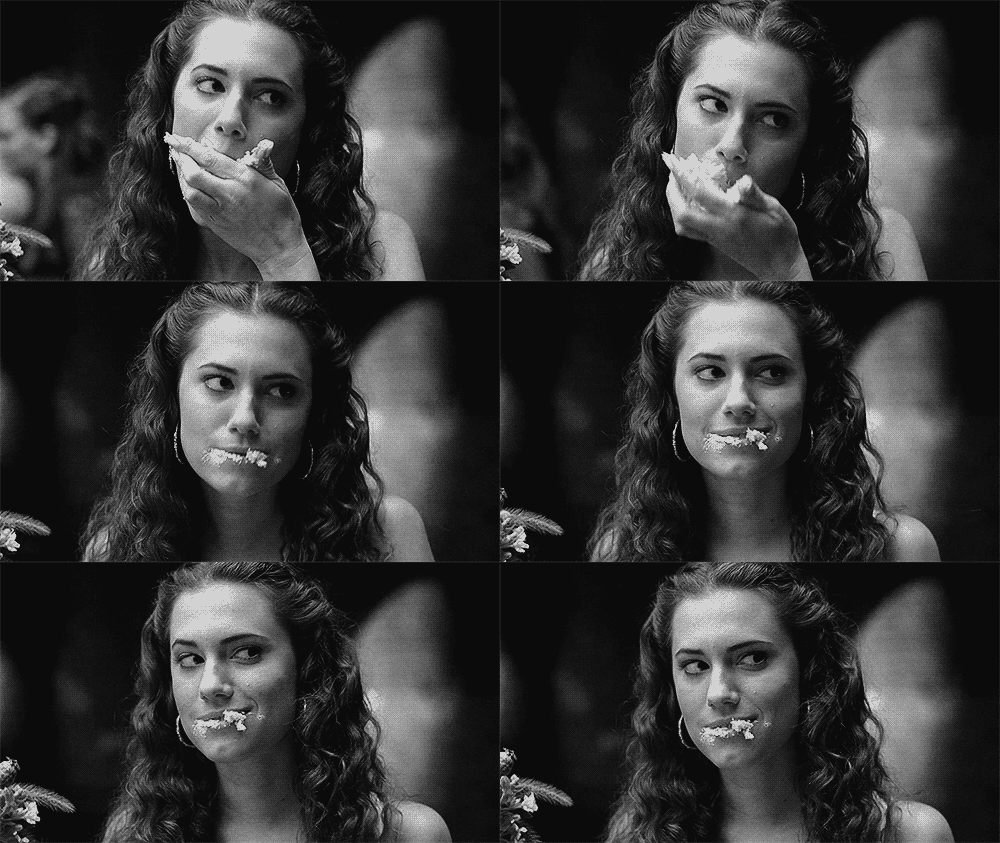
Once you’ve been off long enough, it’s like watching your loved ones chug cupcakes all day, every day.
At a stoplight? Eat a cupcake.
Can’t sleep? Cupcake on the nightstand.
Go out for a walk with family? Nah — stay inside and eat 10 cupcakes.
⸻
Just like the lab-engineered crunch of a Cheeto, social media is designed to make you crave more.
It offers processed versions of real things:
human connection, intellectual curiosity, ideas, inspiration, and news.
It’s technically “content,” but it’s not nourishment.
Worse, it hijacks primal instincts that once kept us alive, using them now to make us consume endlessly — poisoning us from the inside out.
⸻
When consuming processed media:
We crave connection, but feel lonely.
We crave relaxation, but spike our cortisol.
We crave release, but feel more depleted.
We crave stimulation, but end up numb.
We crave the bag of Cheetos — and when it’s empty, we just want more.
If we are going to care so deeply about the health and wellness of our bodies, we need to pay attention to the processed food we feed out minds.
Observation 3: Mainlining Propaganda
On my flight home, I did something I often do when I have social media off my phone — something that’s admittedly a little creepy but endlessly fascinating. I peek over people’s shoulders to see what they’re scrolling through.
One day, I’d love to turn this into an art installation, but for now, the airplane is the gallery. From my seat, I watch people scroll through a blur of content - funny videos, inspirational quotes, baby pictures, home renovations - and then, almost on cue, the tone shifts. Around the twelfth or thirteenth post, boom: a politically charged headline. “Charlie Kirk was a hero.” “We are starting a civil war.” Keep scrolling, and a few posts later, you’ll see the same structure over and over again.
It’s like the apps feed you tiny bites of a cookie, and just when you’re comfortable, they slip in a spoonful of medicine. The ratios are deliberate, more entertainment than ideology, but the medicine always comes. That’s the trick. It has to wear the mask of pleasure to deliver its dose.
Beneath all the sweetness, it’s teaching you what to think, who to hate, what to fear, what to fight for — and what to ignore.
The longer you scroll, the more potent the dose becomes. Soon, you’re not just snacking on content; you’re mainlining ideology — spoon-fed by an algorithm that studies your every click.
That’s what makes it so fascinating when I’m observing instead of scrolling. I’m not in the feed. I can see the pattern clearly — the rhythm of manipulation — without the dopamine fog clouding my cognition.
I often visualize the inevitable doom scroll as a scene from A Clockwork Orange — eyelids pried open, screens flashing in our faces.
The only difference? There are no straps.
We’re willing participants — programmed by our own biology.
It’s the great irony of our time: we detox our diets, not our minds. We cleanse our bodies while feeding our brains a steady diet of outrage and far off ideologies — believing it’s freedom, when really, it’s just another form of control.

What are your true values?
Once you take a step back you start to see this everywhere. Generally it is in the form of “original thoughts” that are regurgitated like trained parrots.
The outpouring of love for Charlie Kirk, a man most Americans hadn’t heard of before September 10, 2025.
The sudden obsession with trans people and how they live their lives.
The outrage over the phrase “Happy Holidays.”
The fear that drag queens are coming for our children.
The righteous fury over paper straws, pronouns, or whatever today’s algorithm decides matters most.
I’d like to think this is concentrated on the right, but it equally impacts the left.
The echo chambers of moral superiority and the empathy that ends where disagreement begins.
Maybe you agree with what you see flashing before your eyes. Maybe you agree with part of it, but not all of it. But the important thing to ask, over and over again, is: does this align with my CORE values? That takes a level of mindfulness that we’re often not in a state to access when scrolling through social media after a long, tiring day.
We need to ask:
Does taking healthcare away from millions of Americans align with my values as a Christian and a follower of Jesus’ teachings?
Does mocking someone’s pronouns or identity bring me closer to compassion?
Does sharing another “gotcha” clip or outrage headline move me toward peace—or further from it?
Wake the F Up
Among the blur of dopamine, we need to wake the f up. If we are going to scroll, which many of us will, we need to do so as consciously as possible. We need to see when the app takes us down to the bottom of the rabbit hole.
We need to acknowledge that we are all susceptible to brainwashing even the “free thinkers” among us.
We all need to have a conscious version of ourselves looking over our shoulder in the airport saying, “oh wow this content really wants me to see and feel a certain way. How do I really feel about this?”
This isn’t about saying, “trust no one” or “everyone is brainwashing you.” There are plenty of thoughtful reporters and creators doing great work. The intention is to encourage all of us to engage with these types of media mindfully rather than mindlessly.
That’s why I’ve found the cozy corners of Substack and long-form podcasting so calming. They still give you those little hits of dopamine, but they invite you to slow down, to dive deeper into ideas and engage with content in a way that feels thoughtful rather than reactive.

Alright…but how?
I’ll start by saying this: I don’t have a deep social media addiction, so stronger guardrails may be needed for certain situations. But as someone with ADD, for me it’s all about systems.
1. Mindfulness
It starts with bringing awareness to your social media sessions. Notice how you feel when you see the app icon, and how you feel when you’re done scrolling.
Notice which apps give you that addictive cortisol spike, and which ones actually bring introspection or creative inspiration.
2. Delete the apps. Remove the cue.
For the apps that aren’t serving you - delete them. This is probably the easiest option and can become a habit in itself.
When you’re done with a doomscroll or any kind of social media session, delete the app. As a practice, I try to delete the more addictive apps before going to bed each night. This removes the cue the next morning and often results in an unplanned, multi-day detox.
The great thing about deleting apps is that it doesn’t need to be all or nothing and it allows for more conscious engagement.
If at the end of the day you could use a few laughs and want to scroll through TikTok, do it.
Maybe you’re working on a creative project and find genuine inspiration on Instagram, do ittttt. Seriously, no shame.
But when an app routinely pulls you out of life and work, negatively impacting your nervous system, confidence, or creativity — delete it.
They’ve made it so easy to re-download, but at least you won’t have a chocolate cupcake sitting on your kitchen counter every morning. It’s also a quiet yet bold revolt against the capitalist machine that seeks to control us - and that feels fucking great.
3. Use the desktop version
Need to check a message or browse Facebook Marketplace? Try using the desktop version as your default before resorting to the phone app.
For now, desktop versions are much harder to get lost in a doomscroll.
4. Use an old phone or creative apps
What if you need the apps for work? As a business owner, I know this all too well. Sometimes I’m editing a draft for a reel or you need to engage with other accounts to increase your visibility.
If you’re on the apps for work. A few ideas:
If you’re using the app for video editing and don’t want to lose drafts, try CapCut (for TikTok) or Edits (for Instagram). These tools let you stay creative without keeping the main apps on your phone.
If you’re using the apps for engagement or other work drafts, consider buying an old iPhone. It doesn’t need a data plan — it only works on Wi-Fi (built-in boundaries!) — and you can still sync it with iCloud. That way, you can shoot your content on your main phone if quality matters.
This isn’t an option for everyone, but in recent years I’ve started exploring roles that don’t require success on platforms that don’t serve me. Or, finding alternate paths to success within those roles — through referrals, cross-marketing, partnerships, etc. Again, not possible in every field, but it’s always worth asking: Are there other avenues to success in this field outside of social media?
The Return to Myself
This piece wasn’t meant to romanticize being off social media.
But I will say this: when I’m off it, my nervous system regulates — and I reconnect with my values.
Not what the algorithm tells me to think.
Not what it tells me to eat.
Not who it tells me to hate.
In the quiet spaces between, there’s clarity. I can finally hear my own intuition again.
When I’m away, I start to see others caught in a swirl of processed media and feel deep compassion and concern for our human race and connection among us.
We can all cut the puppet strings. We can look up at our masters and walk away.
DELETE THE F-ING APP
